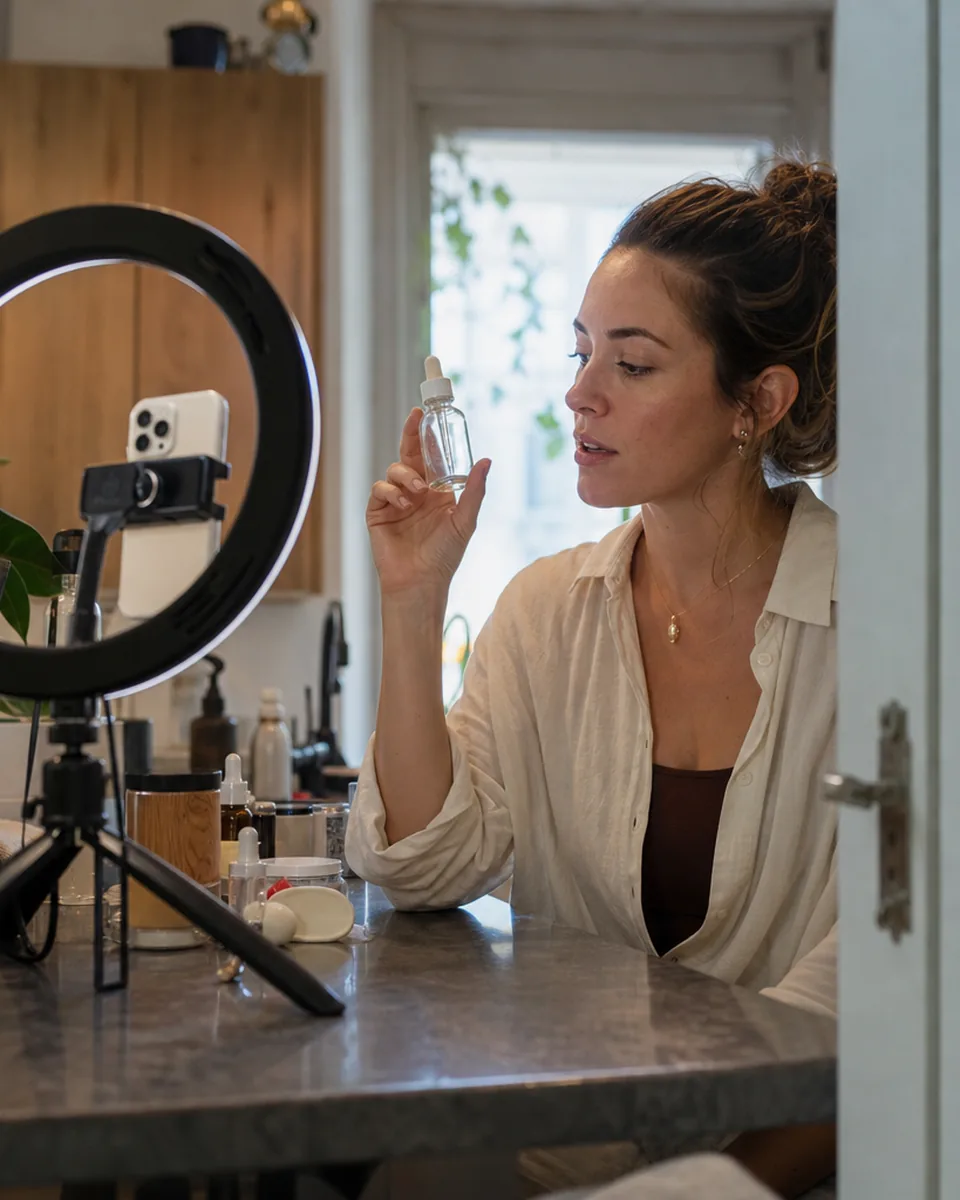
The usage grant sets the price more than the shoot does
Most new brands budget for the shoot day and forget the second half of the deal. The model is paid for two things: the time on set and the right to use their face and body in your marketing. The time on set is easy to count. The usage is what changes the number from a few hundred dollars to several thousand.
A model who shoots ten product photos for your website gives you a small amount of value. The same ten photos running as paid ads to two million people for a year give you far more. The model knows this, agents know this, and a fair rate reflects it. When you hire models, write the usage into the casting from the first line, so every applicant prices the same job.
This guide is general information for brands and models. It is not legal advice. For large campaigns, have a lawyer review your agreement.
Five questions define every usage grant
Every usage clause, short or long, answers the same five questions. If your booking agreement answers all five, you have a clear deal.
- Media: where the content runs (organic social, paid ads, website, email, print, out-of-home, broadcast).
- Term: how long you may run it (3 months, 6 months, 1 year, 2 years, perpetual).
- Territory: where it runs (one country, North America, worldwide, online only).
- Exclusivity: whether the model must avoid working for competitors, and for how long.
- Extras: whitelisting, edits, AI or digital changes, and whether you may transfer the rights to a partner.
Paid ads cost more because they buy reach
Paid social, search display, and video ads put the model in front of people who never chose to follow you. You pay to reach strangers at scale, and the model's likeness does the selling. That is why paid usage often adds a meaningful amount to the base rate.
Write the paid channels you need. "Paid social on Meta platforms and TikTok" is clearer than "all digital." If you test ads for 30 days before a bigger push, ask for a short paid term first with an option to extend at a fixed price.
Whitelisting gives your ads the creator's name
Whitelisting, sometimes called creator-authorized ads, means the brand runs ads through the model's or creator's own social handle. The ad shows the creator's name and profile picture, not the brand's. It often performs well because it looks like a recommendation.
This is a bigger ask than normal paid usage. The model lends you their account identity, and their followers see the ad. Whitelisting usually has its own fee, a fixed term (commonly 30, 60, or 90 days), and a clause on who controls comments and when access ends. Write that the brand removes all access on the last day of the term.
Print and out-of-home sit at the top of the scale
Print covers catalogs, packaging, in-store signs, magazines, and flyers. Out-of-home covers billboards, transit ads, and large posters. Both are hard to pull back once printed, and a face on packaging can sit on shelves for years.
Packaging deserves its own line in the agreement. A model on a box is tied to your product for its whole shelf life. Many models price packaging close to a buyout for that reason.
Broadcast and streaming TV are their own category
TV and streaming video ads are usually negotiated separately, often with session fees and use cycles. If you think a shoot might become a TV spot, mention it in the casting. Adding broadcast after the fact usually costs more than planning for it.
Term is the clock on every right you buy
The term starts on the first publish date or on the shoot date. Pick one and write it. A one-year term that starts at the shoot gives you less time if the campaign goes live three months later.
- 3 to 6 months: common for test ads and seasonal promos.
- 1 year: common for e-commerce and evergreen product pages.
- 2 years or more: common for packaging and brand campaigns.
- Perpetual: usually only inside a buyout, and priced as one.
Organic posts that stay on your feed after the term are a common gray area. Many agreements allow existing organic posts to stay up but forbid new uses after the term. Say this in writing so nobody argues later.
Territory should match where you actually sell
If you ship only in the United States, ask for United States usage. Worldwide online usage is common for e-commerce because websites are visible everywhere. Paid ads, though, can be targeted by country, so a model may price US paid ads lower than global paid ads.
Exclusivity is paid time the model cannot work
Exclusivity stops the model from working for competitors during a set period. It costs the model real income, so it costs you real money. Keep it narrow. "No skincare brands selling in the US for 6 months" is fair. "No beauty work worldwide for 2 years" is a buyout-level request.
If you do not need exclusivity, write "non-exclusive." It lowers the rate and makes the casting more attractive to strong applicants.
Usage changes the fee in clear steps
The table below shows how usage commonly changes the total fee relative to a base rate for the shoot alone. These are general market patterns in many US markets, not fixed prices. Rates vary by city, experience, and the model's following.
| Usage grant | Typical term | How it often affects the fee |
|---|---|---|
| Website and organic social | 1 year | Base rate, sometimes plus 10 to 25 percent |
| Paid social ads | 3 to 6 months | Base rate plus 25 to 100 percent |
| Whitelisting on the creator's handle | 30 to 90 days | Separate fee on top of paid usage |
| Print catalog or in-store | 1 year | Base rate plus 50 to 150 percent |
| Packaging | 2 years or more | Often 2 to 3 times the base rate |
| Out-of-home billboards and transit | 3 to 12 months | Often 2 to 4 times the base rate |
| Full buyout | Perpetual, worldwide | Often 3 to 5 times the base rate or more |
For day rates and city ranges, read our guide on how much to pay a model. Then check our pricing page for what it costs to post castings and book through PostModels.
A buyout buys simplicity at a high price
A buyout grants broad usage across most media, worldwide, often for an unlimited term. It is simple to manage because you never track expiry dates. It is also the most expensive grant, and many experienced models decline buyouts or price them high.
Ask for a buyout only when you truly need it, for packaging that will run for years, or a brand face you plan to keep. For everything else, a defined grant with a renewal price is cheaper and fairer.
Renewal prices belong in the first agreement
Write the renewal price now. "Brand may extend paid social usage for 6 more months at 50 percent of the original usage fee" saves a second negotiation when an ad performs well. Models like it too, because the brand already agreed to pay for success.
Clear clause wording prevents most disputes
Below is plain wording you can adapt in your booking agreement. Replace the brackets with your details. It is general information, not legal advice.
- Media: "Brand may use the Content on Brand-owned websites, Brand-owned organic social accounts, and paid social advertising on [platforms]."
- Term: "Usage begins on [date of first publication] and ends [12] months later."
- Territory: "Usage is limited to [the United States]. Online organic use may be visible worldwide."
- Exclusivity: "Model will not appear in advertising for [category] brands sold in [territory] for [6] months from the shoot date." Or: "This booking is non-exclusive."
- Whitelisting: "Model grants Brand advertising access to Model's [platform] account for [60] days. Brand removes access on the last day."
- Edits: "Brand may crop, color-correct and resize the Content. Brand will not alter the Model's body shape or face or create digital likenesses of the Model."
- Renewal: "Brand may extend usage for [6] months at [amount]."
- After term: "Organic posts published during the term may remain. Brand will not create new uses after the term."
Digital likeness rights need their own line
New tools make it easy to alter faces, swap outfits, or make new images from old ones. Many models now require written consent for any digital likeness. A clear line that the brand will not generate new images or video of the model without separate written consent protects both sides and keeps the deal clean.
Put the usage in the casting, not only the contract
The best time to state usage is in the casting post itself. Applicants price their time and usage together. If the casting says "website and organic social, 1 year, US, non-exclusive," every applicant can quote a real number. If the usage appears only in the contract, you get surprises after you pick someone.
On PostModels, usage rights are set per casting and written into the booking agreement. When you post modeling casting calls, the usage fields sit next to the rate, date, and location. The same terms carry into the agreement both sides sign at model booking, so nothing gets lost between the post and the shoot.
A good casting post covers six usage points
- Media list, in plain words.
- Term and start date.
- Territory.
- Exclusive or non-exclusive, and the category if exclusive.
- Whether whitelisting is included, and for how long.
- Whether the rate shown includes usage or covers the shoot only.
Models should read usage before they apply
If you are a model, the usage line is the most important part of a casting after the rate. Organic social for a year at a fair rate is a normal job. Unlimited worldwide usage at the same rate is not. Ask questions in messages before you accept. You can browse modeling jobs with the usage spelled out on each casting.